1, it reduces flailing by having the forward-facing occupant flex, bend, or lean forward over his/her legs in some manner.(-足を曲げたり、体を前傾することで衝撃を軽減することができます。) 2, it reduces secondary-impact injuries by pre-positioning the body, predominantly the head, against the surface that it would otherwise strike during that secondary impact, thus reducing the momentum of the head and other parts of the body.(-事前に身体や頭を衝撃に備えた位置にすることで、着陸時や(パンクなどによる)着陸後の衝撃による怪我を軽減させ、身体への衝撃を減らすことができます)
Some brace positions are undesirable as they increase the risk of injury to people occupying a forward-facing passenger seat.
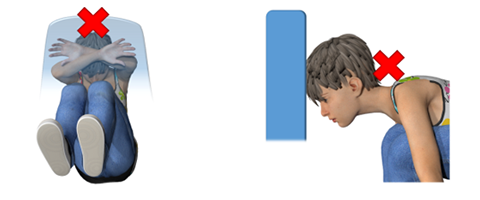
Based on medical SMEs interpretation and opinion, when adopting the brace position, passengers should avoid certain positions as outlined in figure 6-4 that may cause injury to the neck and/or larynx. In addition, passengers should refrain from resting their head on crossed forearms or their hands, which risks fracturing both forearms and/or both hands and fingers.(-医学的な意見に基づき、衝撃防止姿勢では図6-4に示した図のような姿勢は首や喉頭に損傷を与える可能性があるので、避ける必要があります。また、手や交差した腕の上に頭をつける姿勢を取らないようにする必要があります。これは、衝撃により腕を骨折するリスクがあります。)